Wednesday, 31 March 2010

Films of Shame: Citizen Kane

E1BF47AA-8B27-429A-9B34-1C51BD17AC60.jpgThere was a man, a certain man...

Films of Shame
Citizen Kane
Mortal Pain
Breathes a name?
Lots of claims
Citizen Kane


Not all of my Films of Shame will start with a plot synopsis in the form of a poem, but the above nicely sums up the story of Citizen Kane: in which the title character dies and his last word is rosebud. Reporters speak to lots of people from his life in the hope of finding out what the word means and hence gaining some insight into one of the most famous men of their generation.

The film was written, directed by and stars a 26 year-old Orson Welles. And the youthful energy and audacity of Welles comes across in every frame of the film. I knew how ground-breaking the movie was supposed to be at the time, and was interested to see if that would still hold true to someone watching the film almost 70 years later.

For example, I was listening to a podcaster describe Hitchcock's 39 Steps, and how every chase/action scene felt cliched since they had been copied by some many directors since. This, despite the fact, it would have been 100% original and innovative at the time.

3D2E5D3A-6225-42A2-8309-B4914B50F90E.jpgHowever, in the case of Citizen Kane, the movie still feels surprisingly fresh and full of vitality now. This is despite the fact a lot of movies by a lot of directors who will have been profoundly influenced by this piece.

Two things stand out in particular. The first is the way each scene is framed. Through out the movie, you will have Kane in the centre of the screen, in the background, in focus, as two or more characters discuss him in the foreground, also in focus. This deep focus is used in pretty much every scene in the movie, and gives you the sense that both Kane and the accounts about him are equally significant.

Secondly, the narrative structure was also ground-breaking at the time. It starts out with a newsreel, giving the audience a ten minute factual account of Kane's life. We then cut to a room where journalists are watching the reel and criticising it: saying it doesn't get under the skin of Kane. So the rest of the film is told in the form of flashbacks of the people Kane was close to. Since they're based on subjective accounts, we only ever see Kane from someone else's point of view, and are never quite sure how accurate a picture we are getting.

Overall, Citizen Kane is a movie anyone with at least a passing interest in film should see. It has a complexity and depth that few films have managed to emulate since. For a classic to be described as such, its story, as oppose to its cinematic techniques, must stand the test of time. Most of all Citizen Kane succeeds in this regard, as the movie forces us to question who we are at our core, and what is most important to us. What is our rosebud?

E09AED10-FB0E-4AD1-B896-A7B4A20C2BD2.jpgPerhaps the movie itself better sums up the plot than my attempt at poetry earlier, since they sing all about Kane about half-way through the film. Fans of the White Stripes may recognise the lyrics from the song "The Union Forever":

There is a man - a certain man
And for the poor you may be sure
That he'll do all he can!
Who is this one?
This fav'rite son?
Just by his action
Has the Traction magnates on the run?
Who loves to smoke?
Enjoys a joke?
Who wouldn't get a bit upset
If he were really broke?
With wealth and fame
He's still the same
I'll bet you five you're not alive
If you don't know his name
What is his name?...
It's Charlie Kane.
It's Mister Kane.
He doesn't like that Mister
He likes good old Charlie Kane.


Saturday, 27 March 2010

Scott Pilgrim Trailer: Frame by Frame Analysis

Regular readers of this blog will know how much I'm looking forward to the Scott Pilgrim movie - it was my top pick in my Top 5 Most Anticipated Movies of 2010.

So imagine my excitement on Thursday, when its director Edgar Wright (Shaun of the Dead, Hot Fuzz) tweeted a link to the teaser trailer. I've embedded said trailer here for you in all its high-def glory:


If you're a fan of the comic, or were in any way impressed with the trailer, the following is also worth a look. It's a frame-by-frame analysis that explains a few more of the plot details and characters in the kind of awesome detail I could only dream of doing:


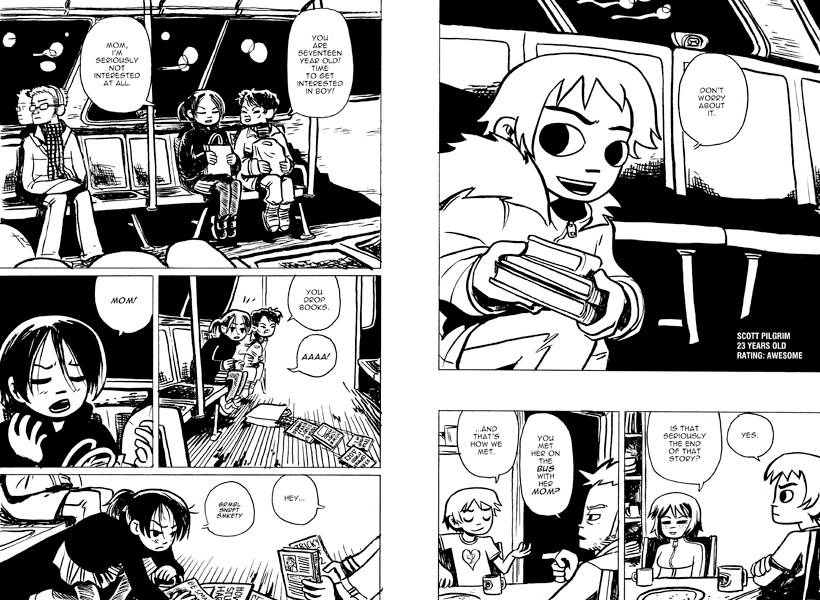
Anyway, colour me excited. I'd strongly advise reading the comics before you see the film, since the series is one of the most enjoyable and engaging stories I've read in a while: full of humour, geeky references and even a few tears. I've included the first four pages of volume 1 below to give you a wee taster. If you like what you see, why not buy it at amazon now?

If you're having trouble reading the images below, just right click and go to 'View Image' to see a nice big, readable version.

"Scott Pilgrim is dating a high-schooler?!"

3E097C80-6E8A-4F32-B72C-C60D1170B723.jpg

.
9FB978DE-381B-43D2-BA44-F86E0E557998.jpg

Tuesday, 23 March 2010

Top 5 Kick Ass Kids

0DD5888D-EC19-49FA-9997-F8A67D364148.jpg


The idea of kids beating up adults is hardly new. One can trace it back through time to when a certain Israeli boy, with ideas well above his station, decided to take on the might of a Philistine giant. After whacking him on the head using a Dennis-the-Menace-style sling shot, he then goes all R-Rated by decapitating him.

Given the long history of these type of stories, it's hardly surprising to see so many depictions in today's culture. This week, for example, sees the controversial release of Kick Ass, a movie which features a 12-year old swearing like a trooper as she slices dices and shoots her way past foes in a manner Tarantino's Bride would be proud of.

In honour of this new edition to the world of violent child protagonists, I've compiled my Top Five. Feel free to embarrass me with obvious omissions.

5. Karate Kid
Violence won't solve all your problems, but it will get you the respect of your peers; allow you to beat up your worst enemy; and win over the girl. Contained within the seemingly innocent world of Karate Kid was surely a much darker message about diplomacy versus action. Thankfully, another generation is going to receive this important message in the upcoming remake starring Jackie Chan.

4. Battle Royale
Surely the violent kids movie to end all violent kids movies. With the hope of reducing overpopulated Japan, teenagers are stuck on an island together in some warped, literal version of Survivor. The rules are you get one weapon (which range from axes to saucepan lids), and if there's more than one person alive after 72 hours, everyone dies. A movie that could surely only have ever been made in Japan, it's like Lord of the Flies with machine guns.

3. Peter Pan
Poor Captain Hook. Imagine being on an island with tweens and teens, who were not only going through adolescence, but had the indecency to remain in that state forever. No wonder he went mad and started chasing crocodiles. Also, what self-respecting adult would let children fly with swords in their hands? Health and Safety anyone?

2. Home Alone
So robbers are about to break into your house. You know the time, you know what they look like. But rather than merely contact the police, you decide to enact some crazy mouse-trap like scheme involving tar, heated door knobs and paint tins. Clearly those black and white gangster movies have had some kind of crazed psychotic effect on your brain. Then again, being forgotten twice by your parents in the space of a year is bound to have deep-rooted psychological implications.

1. Let The Right One In
Like Karate Kid, this features a boy getting bullied. Only, instead of Mr. Mayagi, he gets the girl next door to help him out. Only thing is, the girl next door is a vampire - A vampire who can scale buildings like spiderman. Her ability to inflict pain on her adversaries makes Kick Ass' Hit Girl look like Malibu Stacy.

2E837219-5467-4DE5-B1E7-2E4A311A22EB.jpg

Sunday, 21 March 2010

Film School: Vagabond

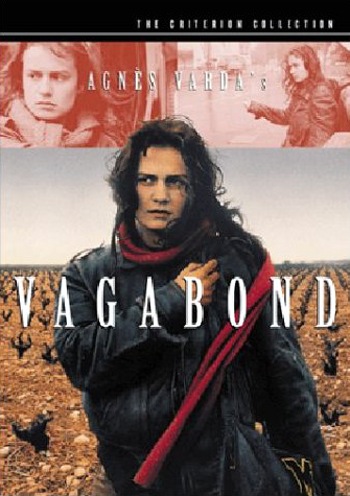
930938DB-EAB1-45BA-B572-311A85BBF434.jpgIn 2007 Sean Penn directed Into The Wild, a true life tale about a young man who wants to escape the clutches of modern capitalism by never staying in one place for any marked length of time. The pinnacle of this way of living is to go off into the wild of Alaska by himself for an indefinite period.

Way before that, in 1985, French director, Agnes Varda, made Vagabond, or to give it its French title Sans toit ni loi, which translated literally means "Without Roof or Rule". Like Into The Wild it's about a young woman, Mona, who lives on the road and has no place to call her own. Relying instead on the kindness of others to survive.

A fictional tale, the main thing that separates it from Into The Wild is that the lead character has none of the lust for life that Penn's movie does. Where as Hirsch's character is able to bring a lot of warmth and encouragement to the people he comes across, Mona seems like much too broken a character to be able to do the same thing, and will sometimes greet kindness with a special kind of apathy.

In fact, the true nature of her character is at the centre of the film. Characters address the camera, at various points in the story, expressing their experiences with her, and opinion on her. All differ wildly. What they do have in common in that they reflect something of their own prejudices and outlook.

72BD39A4-4029-4B14-81F7-0888F20703E0.jpgThese differing perspectives give the movie an added dimension, as we the audience are invited to piece together who Mona really was, and whether she was a victim of circumstance or a master of her own fate.

Overall, there's a lot to like in this film. The faux-documentary style, the ambiguous nature of the main character, and the way people's opinions reveal more about themselves than about the person they're describing all make this film very easy to recommend.

I started this series based on titles I was studying at an evening course at Edinburgh University. Vagabond marks the end of the course, and so the end of the series. If you've missed any of the Film School articles, just click here.

My next series will be "Films of Shame". That is films, I really should have seen by now, but haven't.

The first five will be:

1. Citizen Kane
2. Godfather Part 2
3. The Shining
4. Taxi Driver
5. Annie Hall

I'd be interested to know other people's "Films of Shame". Have you never seen "Star Wars", "Schindler's List" or "The Wizard of Oz"? Do you have to pretend to know what's so special about Bruce Willis' watch in Pulp Fiction? Or do you sometimes intersperse conversations about Lord of the Rings, with "My Precioussssss" in the hope no one will find out your guilty secret?

Confessions welcome below:

Friday, 19 March 2010

Film School: Chungking Express

96CE24E6-26D1-46EC-87CD-DE7DFAA4BD50.jpgOne of the most influential movie of the 90s was Tarantino's Pulp Fiction. Combining style, instantly quotable dialogue, and a non-linear, multi-threaded narrative it became an instant classic when it was released in 1994. Watching it back now, it still feels like a very recent, modern film.

Released the same year was the much less famous Chungking Express. Like Tarantino's movie it features a multi-thread narrative, and is incredibly stylish. It also features the same kind of film references Tarantino has become famous for. As such, it isn't at all surprising that this is one of the American director's favourite movies of all time.

It features two almost entirely separate stories, linked by a takeaway restaurant called Midnight Express. The two narratives are both based around cops trying to get over recently failed relationships. However, the women they are interested in couldn't be more different. One is a drug dealer who has just been double crossed by a male associate. The other fits the description of Manic Pixie Dream Girl.

A Manic Pixie Dream Girl (or MPDG for short), for those of you who don't know is the term given to women who fly in and out of a character's life, teaching a normally uptight male lead, to relax and enjoy life more. Other examples include Natalie Portman in Garden State, Maggie Gyllenhaal in Stranger Than Fiction, and Kirsten Dunst in Elizabethtown, which is where the term, incidentally stems from.

CB2FF5EE-162F-4109-8548-20D8D8B1347A.jpgThe MPDG in this case is Faye, who dances around to California Dreamin'; breaks into the male lead's apartment so she can clean it and rearrange furniture; and glides across our screens with few concerns beyond making sure the music is loud enough so she can't think.

The success of the movie depends upon whether you find all of this charming or deeply grating. The chances are if you've ever fallen for (or had a girl-crush on) Natalie Portman, Zooey Deschanel or Maggie Gyllenhaal in any film you'll probably fall for Faye.

Beyond the narrative of the movie, the cinematography on offer is a joy to behold. Mixing fast action, depictions of claustrophobic living and a beautiful mix of yellows, blacks and deep reds that get under the skin of Hong Kong living.

Overall, this movie is very worthwhile, and appears to say a lot through very little. The more I've reflected on it, the more I've come to appreciate all the different layers it has. Like that movie of Tarantino's it's dated very well, and still feels incredibly relevant and ground-breaking 16 years on.

T7YMNB4WYFTN