Showing posts with label television. Show all posts

Sunday, 30 May 2010

What I've Been Watching: Lost - Final Thoughts

88063A59-6A1A-43E7-99DC-A6A9C96BB8F7.jpg"The longest single story ever told on television" Whatever else Lost was, it was surely that. Perhaps only Battlestar Galactica has come close to telling such a long, extraordinary tale. Unlike most television, which tells a new story each episode (CSI, House, etc.) or each season (The Wire, Buffy, and so on...), Lost's story lasted six seasons, with a clear beginning, middle and end.

As such, it frustrated and engaged fans in equal measure; as they debated the meaning of numbers, four-toed statues, smoke monsters and polar bears. Of course, the reality is most of these questions were answered in the final season. And even the most hardcore of fan cannot have expected every single thread to be tied up in its final episode.

However, this was the show that took its fans and its mythology incredibly seriously. The final season showed just how much the writers had invested in the show. Time and again we saw things that had happened 5+ years ago being referenced, and it's a testament to the show's ability to create memorable moments and mysteries that we were able to remember precisely what it is they were referring to.


Season 6 Review
(SPOILERS FOR THE FINAL SEASON AHEAD)

The final season was based around Jacob and NotLocke: the two brothers who had been bringing and testing people on the island for at least 150 years. After Jacob's death at the end of season 5, the island needed a new protector, and so 'the candidates' emerged.

The battle between the brothers provided the backdrop to the season, as we saw how they're differing opinions on humanity influenced their relationships with those who were washed ashore.

Jacob's final revelation that the reason for them being there was because their lives needed direction made surprisingly perfect sense of the events of the last six seasons. This was underlined by the reunions of all the characters in the FlashSideways (or perhaps more accurately, FlashUpwards) which were by far the highlight of the finale. More than once I had tears in my eyes as Charlie and Claire, Sawyer and Juliette, and so on were reunited. Hurley's understated remark to Ben that 'he was a good number two' likewise provided a surprisingly poignant moment.

If Lost's finale said anything, it was that the show was not primarily about the island and its mythology but rather the relationships the Losties made there. Relationships that allowed each individual to put all their worries and concerns to one side in the alternate reality and enjoy life again.

My only 'theory' about the ending is that when each Lostie died, instead of being reborn again, they went straight to boarding Oceanic Flight 815 - any memories they had being false ones based on memories of their real lives.

The reason I think this, is because it is clear the flight was supposed to be the most significant event in their lives, and it makes perfect sense their brain would go straight there to relive it. So as soon as they die, they go straight onto the flight in order to reach their final destination with the people who were most important to them.

CAC4E4A4-0F21-48EF-8070-B8AC9289359E.jpgAlthough Christian Shepherd's revelation in the final fifteen minutes kind of came of the blue, upon reflection I think it makes perfect sense. At my most cynical I could say limbo was just an excuse to bring all the old cast members back, and their reasoning behind not having Shannon on the plane makes zero sense.

However, the season certainly set-up these religious themes: the epic battle between good and evil; finding one's destiny; and earning one's redemption. In the context of these themes, introducing limbo or heaven into the equation I have no real problem with.

Fan Reaction

Finally, it's interesting to consider fans reaction to the finale. A reaction which it seems has been somewhat mixed. Perhaps the weakness of doing one story over six seasons is that fans have so much invested in the show, and have come up with so many theories about the island and the overall story the show is trying to tell, that they'll inevitably be disappointed when the show diverges from their own interpretation.

However, as I mentioned in my television review of the decade, the appeal of Lost to me has always be always been it's ability to surprise, and as such I should give the show credit for continuing to bring me with it for six years without ever really feeling cheated when new concepts like buttons, time travel, or alternate realities were introduced. Normally, shows would only introduce these type of things for one episode, with any plot holes, being easily ignored for the sake of that week's story. Lost meticulously established such grand concepts into the show's mythology, and for this it should be given a lot of credit.

I think when fans reflect back over the six seasons, they'll see a truly unique story that was unprecedented in its scope and ambition. Unlike Battlestar Galactica which 'Jumped The Starbuck', I don't think Lost has such a singular moment where fans gave up on the show. As such I think those disappointed by the finale will soon forgive the show as they reflect and re-watch the story in its entirety in years to come.

Friday, 23 April 2010

What I've Been Watching: Television

A8C0C7D7-2C8C-4572-99DF-7DC5FFAAF7CE.jpgSarah Connor Chronicles: Season 2
The Mother of All Destiny

The Terminator franchise has had a somewhat turmultious history. Terminator and Terminator 2 are considered to be among the best sci-fi movies of all time, containing the performances Arnold Schwarzenegger will be remembered for. Terminator 3 was considered to be a fairly insignificant sequel, just about staying on the right side of average. Finally, Terminator: Salvation was generally considered the biggest disappointment of last year's blockbusters. Having few new ideas or stories to convince us the story Post-Judgment Day is worth telling.

Sarah Connor Chronicles sees the title character's battle to bring up and protect her teenage son, John. He has the unenviable task of leading the humans rebellion against their machine overlords in the future. They have the help of Cameron, a machine FutureJohn has reprogrammed to protect TeenageJohn. Confused? Try not to think about it too much...

Where as season one saw our happy family try to hide and destroy anything that could bring about the rise of the machines, season two sees them more accepting of humanity's fate.

The season is patchy in parts. At its worst, episodes are remakes of the original movies: with our heroes trying to escape a robot sent from the future. Also references to religion were completely misjudged and patronising. With one character being chosen to teach a machine morals purely because of his faith. The subsequent 'theological' conversations failing miserably to hit the depth I feel the writers should have been going for. Evidently, they hadn't seen The Two Cathedrals.

At its best, it compared the struggle to that of seasoned war veterans, who find it difficult to keep going with all the pain and suffering they've endured. Sarah's ongoing struggle to both protect her son, but allow him to become the man he needs to be providing an excellent undercurrent to all the series' events. The two extra protagonists they added, Riley and Jesse, proved to have the most interesting this season. Perhaps the reason they worked so well is that unlike the other characters, they don't have the baggage of the film's canon looming over them.

So a fairly uneven season, that did have some interesting things to say, although I feel the franchise it was based on actually proved to be a hindrance as oppose to a help. Sometimes I wasn't sure the type of show it wanted to be, and too often it would default back to slow motion shots of Terminators unceremoniously taking out an innocent bystander. This lack of forward momentum meant I found it difficult to engage with the storylines at points, and meant I wasn't as engrossed as I could have been.


Sarah Connor Chronicles: Seasons 1 & 2 are both available on DVD right now.

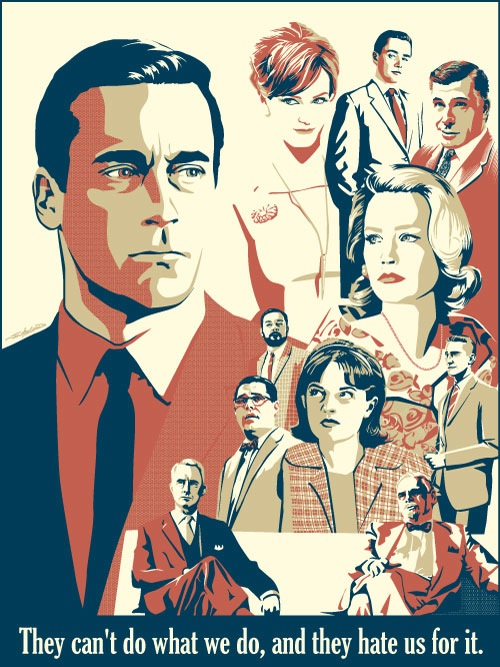
967896E7-F3B4-4899-A86B-7DE7951F5113.jpgMad Men: Season 3
Selling Your Soul

Mad Men has just finished its run on BBC4 and remains just as strong as ever. Set in the sixties it tells the story of an advertising agency in Manhattan.

In a story-telling form similar to The Wire, events take a while to get going, with little appearing to happen from episode to episode. However, since the show is based around on its characterisation, small events or comments can have huge significance later on.

Where the show succeeded most this season was in its amalgamation of its characters and real events from the sixties. In particular the way it handles (SPOILER for real life coming up) the assassination of JFK was a complete triumph. Masterfully combining both a realistic portrayal of how the news came out with possibly the most engaging character moments of the season.

In common with shows like Friday Night Lights and The West Wing (At least Seasons 1 to 4) it's difficult to separate this season's events from previous seasons. This isn't a show you can just pick up at some random point, but rather have to watch from the beginning. It has the philosophy that stories shouldn't explain everything to their audience, but should instead force them to lean in and engage beyond what is merely happening from scene to scene. As such fans of The Wire can rejoice, here's a show that at least comes close to matching its quality, patience and vision.

Mad Men Season 3 is released on DVD this Monday, 26th April in the UK/Ireland

6B7463B7-9BF2-43D5-A441-E033E1E6718E.jpgBeing Human: Season 2
Wanna Watch The Real Hustle?

Being Human has solidified its place among Great British Sci-Fi with its second season. Taking a leaf out of Buffy's book, it does a great job of allowing characters to grow and develop in response to the evil they're fighting.

Having survived a first season, it felt as though the writers had a very clear idea of where they wanted the characters to go this time around.

In particular, the way each episode opened with a flashblack to a character's past really did a great job of extending the world and mythology of the show beyond that of present day Bristol.

The villains for this season were religious fundamentalists. Being Human has dealt with religious themes before. In particular a quote from 1 Corinithians helping convince George to make a significant decision at the end of season one. However, despite some efforts to give a fair representation of religion, they failed: in the world of Being Human, religion is merely used to brainwash characters into unquestionably doing things they wouldn't do otherwise. Instead the villains of the piece were used to support a clear theme of Being Human: that the people we associate ourselves will end up defining us.

There was a great irony to this season, as the more our heroes were told they were less than human, the more they were pushed and attacked, the more monstrous they became. Violence and hatred breeding nothing but the same in return.

This led to a sense of brokenness and despair at the end of the season that had a uniquely British feel to it. Like Torchwood, the world created by the writers is one in which saving the day often comes at a price beyond that which the characters were willing to pay. I'll certainly be watching when the third season returns next year, this time with our characters relocated to Cardiff. Torchwood/Being Human crossover anyone?

Being Human seasons 1 and 2 are both available on DVD right now. (Region 2 only)

Wednesday, 7 April 2010

New Treme Trailer (From Creators of The Wire)

A few months ago I featured the teaser trailer for Treme, the new show based in New Orleans, from the creators of The Wire.

Since then, they've released this trailer, which gives us a much better idea of what to expect from the show:


You'll notice in the trailer, we get John Goodman bookending the footage, talking about what's great about New Orleans: the music, the food, the people.

It seems like this show will do for that city, what The Wire did for Baltimore. Although, the trailer at least, makes it seem more like a love letter than The Wire's warts and all depiction of The City That Bleeds. Nevertheless, given David Simon's history of creating realistic depictions of people, places and events, I don't think the show will match this tone as it progresses.

The characters are what we'd expect from the talent involved. Wendell Pierce (aka Bunk) is a talented but drunken musician , Steve Zahn is loveable mess of a DJ, Clarke Peters (aka Lester) is a stubborn man, determined to live in what remains of his house.

Finally, it's clear that the gap between the federal government's aid and what the people actually need will be a clear theme in the first season. A stand-out line for me was:

"Still got a lot of water?"
"Oh not much... less than a foot."

That and the 'foreign' interviewer implication that New Orleans is no longer a great city, no longer a city worth saving seems to be the lens through which this story will be told.

Treme debuts on HBO in America this Sunday 11th April . No word yet on any UK networks buying the show.

Saturday, 3 April 2010

Top 5 Time Travellers

B2E5BE13-8D5C-4CC0-8B48-54AE5221169B.jpgToday (Saturday) sees the return of Doctor Who, complete with new Tardis, new assistant and a new Doctor, played by Matt Smith. Time travelling as a concept, was arguably popularised by H.G. Wells Time Machine. Certainly the common notion of having a vehicle/device to transport you through time can be linked back to this story. In celebration of this most paradoxical of plot-devices I've devised the following list:

Top 5 Time Travellers

5. Bill & Ted
Every time I think about the plot of this movie, I wonder if I got it right. Bill & Ted get taken on a trip through time so they can pass their history class, otherwise Ted will be shipped to military school, and the Wyld Stallyns will never make the music that forms the utopian society of the future with its very simple philosophy:

Be Excellent to each other. And Party on Dudes!

It's strange that I was first introduced to Genghis Khan, Napoleon and Abraham Lincoln through this movie (and possibly also the short-lived animated series) but there you go. In fact, growing up most of my knowledge of non-British history comes from films/shows like Forest Gump, Animaniacs, etc. It makes me wonder how many kids nowadays were first introduced to Shakespeare and Dickens through their appearance in Doctor Who? Or whose primary knowledge of the past is through the excellent Horrible Histories series? Anyway back to matters at hand:


0E965B5A-3357-4E0B-AD18-5A34D568B34F.jpg4. Donnie Darko
Perhaps a less obvious time-traveller than all the others. However, his conversations with the bunny rabbit, following of worm holes, and so on have definitely earned him a place. Without spoiling anything, its surprising that his decision at the end of the movie hasn't been considered more often by time travellers. It and It's a Wonderful Life would make a brilliantly murky double bill.


3. Hiro (Heroes)
Say what you want about Heroes, in its prime you couldn't help but smile as Hiro got to grips with controlling time and space. His determination to follow a hero's arc, based on superheroes he has read about, feels like a very noughties concept. I often felt sorry for his character as he went on all these ridiculous journeys in later seasons, why couldn't his adventures be as cool as his role-models like Superman or Spiderman?

2. The Terminator
Come with me if you want to live.
There's a lot of great things about the first two Terminator movies. Perhaps the most obvious is the fact that Arnie has only ever been believable in his role as an almost indestructible being. He truly was born to play a robot.

Beyond that, I think the idea of a mother being told her son is destined for greatness is a very powerful one. And Sarah's arc in doing her utmost to protect and develop her son has a surprising amount of depth in it.

Finally the time travel in the movie exists essentially without rules. It's never really established how the technology came about, or whether its creators know whether it's even possible to change the past. It's probably the only movie about time travel where the concept is of little importance to the characters involved.

69116E14-3AA6-47BC-BE6F-277BB70CC455.jpg1. Marty McFly
Marty McFly almost sums up the 80s for me, or at least teen movie stars in the 80s. He's wise-cracking, slick, and confident; he's the guy all the geeks in 80s movies wanted to be. As a child my favourite scene was always the climax of him playing "Johnny Be Good" to get his parents together. Although the brilliantly played scene when he ends up being seduced in his mother's bedroom has probably overtaken it since then.

It's influence on me is such that the rules established in this movie about setting things right for the future, and not seeing your future self are the rules for time travelling. And I always have a deep suspicion for any story where claims to the contrary are made. Example of the types of conversations that go on in my head: "He's meeting his former self - why isn't the universe imploding?! I've never seen something so ridiculous in all my life! Don't they know ANYTHING about time travelling?"

Over to you now: What are you favourite time travellers? Is there any movie/television show whose time travel rules you consider absolutely definitive?

Saturday, 13 February 2010

What I've been watching - Television

26EB8E6A-10A6-4CA7-97D9-9CF6D356A57C.jpgDollhouse (Season 2)
Spoilers for seasons 1 & 2 ahead
Dollhouse's second and final season finished at the end of January. For those of you who don't know, it comes from creator Joss Whedon (Buffy, Angel, Firefly), and stars Eliza Dushku as a 'doll' who can be imprinted with different personalities, depending of the needs of the Dollhouse's clients.

At least, that was the premise of the first season. However, the second season was clearly what Whedon had in mind when he created the show. Instead of having to feel morally tangled about spending time with characters responsible for human trafficking, we can actually start to support Echo's mission to take down the Dollhouse from the inside.

The season itself soars through a combination of tightly constructed storylines, and characters you become more invested in each week. Like all of Whedon's shows, most of the joy is not in the actual plotline of a particular episode, but merely in spending time with 'people' who's fates you really care about.

5BADB986-8BF0-4186-BB88-2674B645168A.jpgYou see, both the strength and weakness of Whedon's shows are that it takes time to become invested in them. Like real people, it's unlikely that you'll hit it off straight away, however, by spending time together, you begin to appreciate and warm to them more. Unlike shows such as 24 and CSI, where the history of a character isn't actually that important unless it has an explicit link to this week's storyline, in Whedon's narratives it's the implicit links that make the show worth watching. The week when Adelle gave Victor her ideal personality, plays into all the conversations she has with him from then on, regardless of his current personality; A remote wipe in the show's fourth episode seems like a plot device, but turns out to have ramifications that last for the show's entire run.
The idea of how memories affect our personalities is incredibly important to the show's story. Perhaps it shouldn't be surprising that Dollhouse is a show which never forgets. Every line, action and plot point, no matter how indiscriminate it may seem at the time, can later be picked up. Perhaps this is why it appealed to so few people: after all isn't television like The Dollhouse's 'chair': designed so we can sit down, switch our brains off and be at peace?

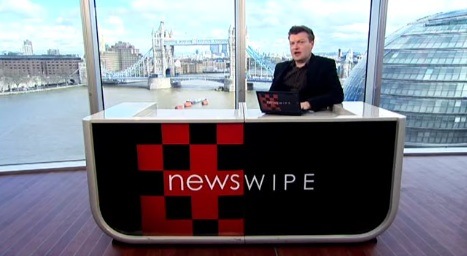
F31719AF-EAC4-47B2-A983-2102AB39E537.jpgCharlie Brooker's Newswipe
Newswipe is surely The Daily Show of British television: holding a mirror up to the UK media, and making fun of it in an insightful way. Unlike 'The Daily Show', which is political satire disguised as comedy, Newswipe has no such pretensions, often allowing ten minute features from contributors with little to no comic slant.

In many ways it's a series of academic articles interspersed with flashing titles, and Brooker making fun of news anchors and celebrities. Despite Brooker's best efforts to make it as funny and accessible as possible, there's no denying his entirely serious and important mantra: the news is biased. It's bias because news is a product: a product like Coca-Cola, Carlsberg and Dyson. And as such it needs to be sold and marketed correctly. News has become more like advertisements, telling people either what they would most like to hear or, ironically, what they would least like to hear: so long as it provokes a reaction. The worst news is boring news, regardless of its truth.

This mantra can clearly be seen in the 'serious' pieces that occur about half-way through Newswipe. Pieces that tell us about why narratives are important in news, why journalists like to keep us afraid, and why news is only important so long as people are talking about it.

73739066-A42E-4E21-B194-100CC701F472.jpgIn the latest episode, Brooker looks at the coverage of Blair's turn to give evidence in the Iraq enquiry. He points out we learnt precisely nothing new about why we went to war. Then again what should we expect? Despite this, whole days were given to stations like Radio 5 to cover this event. An event, the BBC (and all other news organisations) had clearly already decided their opinion on (cf. Hutton enquiry).

Speaking personally here, perhaps enquiries like this show us just how prevalent 'Trial by Media' has become. Regardless of what truth we discover from the months of questioning we've seen senior politicians and aides undergo, everyone has already made up their mind. Most of the media say he's guilty, and no lengthy enquiry is going to change their minds. Like Hutton, they will merely call into question the validity of the enquiry, and point out their own brilliance at uncovering truth. Truth that's seemingly as clear-cut as Blair=Liar. Am I the only one who thinks it's more complex than that?

Newswipe matters because it's able to point out the inconsistencies in news coverage. However, until someone comes up with a different way of portraying news, so that it's interest is second to it's truth and importance, it may remain a lone voice on the hill.

3C382C4F-1227-4EE8-8171-CF0CD8B2645C.jpgThe Wire (Season 5)
Speaking of the media, I just finished the Wire's final season, who's theme is precisely that. In it they deal with the slow death of the local newspaper; America's obsession with serial killers; and lies so big you no choice but to believe them.

Like all the seasons of The Wire, this one is incredibly tight and well-written. In fact it's a bit pointless to wax lyrical about what makes the show so good, since so many people have done so already. If you haven't see it yet, go and procure a copy of season 1 now and settle into what is quite a ride.

The Wire is among my favourite shows on television because of its ability to allow me to see things in different ways. By giving you a detailed look at how drug dealers, addicts, the police, and journalists live and survive you can entirely understand why they make the decisions they do. Except on those ever so rare occasions when the show succumbs to pressure to tell a story more important than the characters it portrays. In a show which prides itself on realism, any storylines which feel forced stick out like a sore thumb. For me there are two such occasions when this happens, the first is season three's Hamsterdam. The second occurs in season five.

F692DAE2-0050-4472-82E1-3E686B02FE20.jpgSpoilers for Season 5 from now on
McNulty's decision to fake murders fits in with the renegade part of his personality that would do anything for a case, but nevertheless felt forced to me. Aside from his decision to give up his stability to rejoin a case, I didn't actually believe he was that invested in wanting to bring down Marlo (unlike Freamon, who's actions I buy entirely). There may be many good reasons for this to fit with what we've seen, but I can't think of them. McNulty's problem has always been with those in authority, and he gets a real kick out of getting one over those with more power than he. He "gives a f*** when it's not his turn", as Bunk would say. Nevertheless, I do feel like he has a conscience (something we see at the end of the season). Doesn't he care about the families of the 'victims' he's manipulating; or the people who's careers he's putting on the line to get his own way? McNulty's actions as a detective up until now have always been at the expense of people unwilling to make tough choices. In season five we see a character inconsistent with that way of working.

Despite this misstep, the rest of the season is as brilliant as ever. The introduction of the media fitting in perfectly with the world the show's creators have taken four seasons to create. Bubble's arc gave us some much needed hope, while Dookie's gave us an insight into how Bub's addiction may have started. Senator Davis' arc showed us how in a democracy, having the public on your side can become more important than truth. Finally, Mayor Carcetti's arc showed us how the best of intentions can soon subside when the allure of power is near. His arc in particular fitting into the Wire's strong idea that be successful at your job always seems to be doing what those in power tell you to do, regardless of its impact on those you are supposed to be serving. The Wire's self-proclaimed 'critique of modern capitalism' will live on long after its end. It works because it asks all the right questions, and forces audiences to consider for themselves what the right answers are. That, and Omar is a badass.

Tuesday, 26 January 2010

Being Human: UK's answer to Buffy?

9AB937BD-EE4E-4249-B928-880E5536D6C7.jpgSeason 2 of Being Human started a couple of weeks ago on BBC3. As the title suggests it's about what it means to be human. The irony is its three main characters are anything but. A vampire, werewolf and ghost to be precise. At this point you've probably already decided whether or not this programme is for you. Much like musicals, sci-fi/fantasy shows have limited cross-over appeal. However, to me judging a show purely on its premise, is as silly as judging a person purely on their appearance.

(Minor spoilers for season 1 in this paragraph)
So if it's not just a fantasy show: what is it? Well really it's a show about the relationships between the three housemates at the centre of the piece. The fantasy elements acting as metaphors for issues people deal with in real life. 503BC7E9-6856-47D1-BC87-F308637B28AE.jpg In the first season we saw the vampire, Mitchell, coping with his lust [for blood] and whether he can have, or even deserves, redemption for sins of the past. The werewolf was trying to form a relationship with someone, but keeping his 'disease' secret kept pushing her further away. Finally, the ghost was dealing with a break-up: having to cope with the fact she can no longer be her fiance on account of her lack of a pulse. However, we later learnt she'd idolised her relationship with him, and chosen to forget certain memories too painful to consider.

Serious Stuff.

CBCC9D31-E3B9-4422-A028-2B5BC2AFBDE3.jpgDespite these rich, tough themes, the show is also very funny. The 'odd couple' (or 'odd trio') nature of the premise providing for plenty of comic moments. This mixture of humour and deceptive depth reminds me a lot of the aforementioned Buffy. That show was a master of making you laugh one second, then shocking you the next: welcoming you into a world of brilliant, likeable characters with great rapport, then shooting you through the heart with a tragedy or misfortune. Although Being Human is a lot darker than Buffy ever was, it still holds true to that formula.

Season 2 Episodes 1-3 are available on iPlayer now. If what I've described sounds interesting to you, please check it out:
http://www.bbc.co.uk/iplayer/search/?q=being%20human

Or if you have a lovefilm account season 1 is here:
http://www.lovefilm.com/film/Being-Human-Series-1/126250/

Wednesday, 13 January 2010

Trailer for "Treme" - New TV Show By Creator Of The Wire

Treme is the new show from David Simon, creator of The Wire. It's set in New Orleans in the weeks and months following Katrina, and will star The Wire's Wendell Pierce (Bunk) & Clarke Peters (Freamon), as well as John Goodman and Steve Zahn. The show will be based around the jazz routes of the city, as you'll get a flavour of in the teaser trailer below:


The show will debut in April in the US. For UK viewers, hopefully that'll mean the DVDs are available by the end of the year.

Friday, 8 January 2010

Glee: the new High School Musical?

6CE73551-9004-4BAA-A4B0-9D570D7719D0.jpgGlee is a new musical comedy, which arrives on British television screens this Monday at 9pm on E4. The plot concerns a small group of high school misfits who join the "Glee Club" in order to perform song and dance routines to as big an audience as possible. Comparisons to High School Musical are easily made beyond even the basic premise. Its lead, henceforth known as 'NotTroy', is the quarterback for the school football team, who wants to perform on stage, even though his teammates have other ideas. The female lead, 'NotSharpay', is willing to do anything to take centre stage, and doesn't care who she stamps on along the way. Add to this the OTT dialogue and caricatures of high schoolers taken from every teen drama ever to grace our screens, and Glee seems like a show unashamedly jumping on the success of the HSM phenomenon.

1B361BA2-5984-4702-82A2-529C4C841FEF.jpgHowever, to dismiss it as a HSM clone is to misunderstand its target audience. After the titles role, and the plot starts kicking in, you quickly realise this is not a show aimed at 8-12 year old tweens. Perhaps this is best summarised by a teacher being fired right at the start of the episode for 'improper misconduct' with a pupil. Later in the episode, we see accused teacher now making a living selling marijuana- Hardly the stuff of Disney Channel movies. Then again, what else should be expect from the creator of Nip/Tuck?

395DC6C5-FC30-4545-A89E-6C7C9B1A8F88.jpgTrying to describe these two aspects of Glee makes it something of a hard-sell. It's not as rude or crude as the puppet musical, Avenue Q. Then again, neither is it as innocent or cheery as High School Musical. As such, you can only really understand the tone of the show by watching it. Having done just that, I felt like I was enjoying it fine as it went through the gears and set-up storylines for the rest of the season. The music was fun, the characters were enjoyable to watch, with just enough depth to keep me interested. Then the final number happened. Unexpectedly, my eyes got a little moist (Admittedly, by no means an uncommon occurrence). Somehow the show and its characters got under my skin and I didn't even realise it. So much so that for the rest of the day I was humming all the songs from the episode. You see, like all good musicals, Glee works on the strength of the songs: its ability to summarise all the emotions of a storyline in one 2-minute number. As such, the first episode at least was a complete success.

If you are a fan of musicals, Glee is surely must-see television. I feel like the harmonies, dancing and arrangements will only improve as the weeks go by. If you're not a fan of musicals (i.e. dead inside), I'd still advise checking it out, since it's mix of humour and quirkiness make it a lot more watchable than the average teen drama: Just try not to be too embarrassed when you end up humming Journey's "Don't Stop Believing" for the rest of the week.

E4 have put the entire first episode of Glee online now for you to view. So if you wanna get a sneak preview of the show click on the link below:
http://www.channel4.com/programmes/glee/4od (UK Residents Only)

What I've Been Watching (Television) - January

One of my favourite podcasts is slashfilm: a podcast hosted by self-confessed movies geeks. One feature they have on the show is "What We've Been Watching" and I've borrowed that ingeniously simple idea for this blog in what will hopefully be a regular feature.

So without further ado, here's some thoughts on the television I've been watching over the past few weeks:

Doctor Who: The End of Time

BA043CB1-9471-4691-92FD-70BC24262B3A.jpgDavid Tennant's well publisized exit took place over the holiday period. The story saw The Doctor team up with Donna's grandfather, Wilfred, to do battle with the resurrected Master.

For me, the episodes were a triumph. A minor quibble would be that the first instalment lacking a completeness that previous episodes broadcast on the same day managed. Like Christmas day movies, there was always something nice about watching a complete adventure with The Doctor, and then being able to switch it off and feel all was right with the world. As such, it would have been nice if the second part had been broadcast on Boxing Day, to give us a sense of imminent closure on the episode. I think what the writers were going for was more a two-part season finale feel, and if viewed simply as that, it worked.

Putting this trivial issue aside, I thought the reason the episode worked so well was the choice of the Doctor's assistant. Having Wilfred at his side was a complete masterstroke. So much so, you forget how little screen time they'd had together previously.

We've seen the writers misstep in the past in this regard. And by this I'm referring to none other than Martha Jones. Creating a Rose-clone for the Doctor to spend time with, merely reminded us of everything we loved about Piper in the role. As such, the show lacked a freshness the previous two seasons had. Donna, although annoying at first, was an incredibly clever move. It was great to see how the Doctor reacted to a different dynamic, and having someone loud and obnoxious to counter his intelligence, wit, (and arrogance) made the show a lot more enticing in its fourth 'season'.

In the combination of The Doctor and Donna's grandfather, we saw two characters with real history in their souls, who had been through hardships and knew their story was approaching its final chapters. That shared bond had an incredibly profound impact on this two-part story. The conversations between the two of them crackling with energy and foreboding.

Clearly this was what the writers were aiming for, since despite all the loud bangs, and flashing lights, this bond was at the centre of the Tennant's final exit. An entirely fitting way for the tenth doctor to leave the show.


Gavin and Stacey (Season 3)

4EEC3A73-071F-4F72-8F85-273789651EF4.jpgI can't decide whether this comes under the category of 'guilty pleasure' or genuinely well-written comedy. Less laugh-out-loud moments than a programme like "The Royle Family". A show, incidentally, it owes an awful lot to. Then again, unlike most comedies, its characters are much more rounded, and as such you are a lot more invested in them. I also felt it was a series that rewarded regular viewing with plenty of references and on-going subplots threaded into its run.

It's ironic (or perhaps entirely intentional) that the two characters after whom the show is named are the least interesting. They live a fairytale romance with storylines that leave little doubt about their future together. It's Smithy and Nessa, played by the shows' creators, that have the best lines, moments and arcs throughout the series. These two characters are its heart and soul, and hopefully their real-life counterparts, James Corden and Ruth Jones, will continue their writing partnership in the future.

Gavin & Stacey started as a small show on BBC3, and finished its run on New Year's Day on BBC1. I think its almost-universal appeal comes from the central bond between all its characters: they look out for each other, love spending time together, and as such, you actually want to spend time with them. Gavin and Stacey was never going to be a ground-breaking show, but it should be commended for its simplicity and warmth in a genre increasing dominated by cynicism, and unlikable leads.

Peep Show (Season 2)

644F087C-2469-4207-B3FB-2ABB86D2C738.jpgSpeaking of unlikable leads, I wouldn't normally mention a show that's been out for five years, and fairly well-known. However, the whole series (seasons 1 to 6) is available on 4od here:

http://www.channel4.com/programmes/peep-show/4od (UK Residents only)

If you've never watched the show about two guys in their late 20s/early 30s. Its uniqueness comes from the fact that most of its episodes take place from Mark and Jeremy's point of view. As such, we always know what they're thinking. The insights we get are excruciatingly honest (imagine someone could hear every single thought that crossed your mind), yet funny and (mostly) endearing at the same time.

Peep Show is not for the faint of heart (it does nothing to dispel the idiom that guys only think about one thing) However, beneath its crude exterior lies a very funny and insightful show.

Coming Up Next: Expect A "What I've Been Watching: Film" Post in the near future, as well as a preview of Glee, a new American Musical Comedy Show, which premieres on E4 next week.

Tuesday, 5 January 2010

Top 5 Television Seasons of 2009

The last of my top fives for a while, this concerns what I consider the television highlights for 2009. Unlike film, it's impossible to come close to watching everything that comes on, so this list is by no means definitive. My only rule for doing this was that the show must have been broadcast somewhere on British television this year. As such, I've had to include one honourable mention below for a show broadcast in America this year, but which has still not been picked up beyond its first season by any network in the UK.

I think it's also worth mentioning my biggest disappointment for the year: and that's the final season of Battlestar Galactica. At the start of last year this would have been top of a hypothetical Most Anticipated Shows of 2009 list. And, while I enjoyed it fine at the time, over the year I've come to appreciate just how big a disappointment the finale was.  It failed to adequately answer a lot of questions, and threw away important themes that had been set-up through out its previous seasons. However, my disappointment for the finale and season can be adequately summed up with one word: Starbuck.

Anyway, enough with the negatives, let's talk about the positives:

Honourable Mention:
Friday Night Lights: Season 3 (DVD: Region 1 only)

Not only has this not been broadcast in the UK, only season 1 of it is available on Region 2 DVD. Such is my love of the show, I've imported the last two seasons from America in order to watch it. It's such a pity so few people watch this show. I actually think this will be a show people discover over time, and hope it gets the audience it deserves as word gets around about it over time. (Much like that HBO show based in Baltimore).  Season 3 was the end of an era, as most of the characters we've come to love were graduating high school.  This season was, in my opinion, the best so far, as the audience and writers know all the characters so well the storylines really hit home.  Tyra's arc this season (and in the series as a whole) was a real highlight for me: summed up by my tears of joy/sadness/emotion when she writes her application letter for college.  The season ended on an unexpected cliff-hanger, which I'm certain will give the show a great lease of life when it returns.

5. Torchwood: Children of the Earth (BBC 1)
Torchwood finally reached its potential with this 5 episode mini-series. Season 1 started poorly, but picked up a little towards the end. Season 2 understood better that making an 'adult' version of Doctor Who doesn't mean having to have lots of swearing and sex. This story gave it the room to come up with the kind of haunting, bleak story Doctor Who could never attempt. A brilliantly paced story with a great mix of action, horror and drama. I hope they can continue that kind of form when it returns for a full season, presumably at the end of this year.

4. Mad Men Season 2 (BBC 4)
An incredibly well-written show which can so much with so little. It's hard to describe why a show about an advertising agency in the 60s is so watchable. Perhaps it's because the characters constantly surprise you without acting "out of character". An episode can give you just one scene with a character that totally changes the view you've had of them for the past two seasons. (One scene from The Golden Violin comes to mind). If you're a fan of shows like The West Wing and The Wire you should definitely check it out.

3. Lost - Season 5 (Sky One)
(Spoilers for the end of Season 4)
The show that never stops getting stranger. This season our lostees were not only lost on an island but lost in time. It's crazy that they never introduced us to the time-travelling elements of this show, but thankfully the writers have taught us to expect the unexpected and I feel as though these elements really paid off. The Variable, my personal fave, summed up how well the writers could use this new dimension to create great moments of drama. As normal, the season ended on a cliff-hanger. Only this one is so big, I literally have no idea what season 6 will be about. It starts again in about four weeks and I can't wait.

2. Dollhouse - Seasons 1 & 2 (Sci-Fi UK)
(Spoilers for season 1 ahead)
It's strange to think that a year ago, I hadn't even seen one episode of this show. Like Torchwood (and Buffy and Firefly) it got off to a shaky start. The procedural nature of the early episodes not suiting the stories its creator, Joss Whedon, has become known for. Since about half-way through the first season, however, its become an incredible show. Not least because of the ground-breaking Epitaph One: which showed us a startling version of the not-so-distant-future our protagonists helped create. That episode has really propelled the second season of the show, where we see the characters make the seemingly innocuous choices that will lead to the end of civilisation as they know it. A show which really rewards second viewing since the writers sow a lot of seeds early on that they pay off later. Like Firefly, I think this will be a show only appreciated after it has stopped airing at the end of this month.

1. The Thick of It - Season 3 (BBC 2)
I had heard the The Thick of It was really worth watching, but just never got round to watching it. So when the film In the Loop, which is based on the series came out, I thought I'd better check it out. I wasn't disappointed. Its blend of political satire, awkwardness and strangely poetic swearing won my over. So much so, that the film is definitely my favourite comedy of 2009. The third season started in October, and I wish I'd watched from the start. In the age of MPs expenses, its dark take on the inner workings of politics feels all the more pertinent. The episode where they appear on Five Live was a personal favourite: with joy turning to anguish and back to joy for the two parties and their MPs at every turn.  When Tucker and his Conservative rival clash at the end, the blend of machoism and insecurity was one of the best written pieces of drama I've seen.  That scene superbly sums up why the show works: despite big personas, the characters are written as real people, meaning the dramatic moments hit home just as well as the comedic ones.

Oh and if you're interested my top five most anticipated shows of 2009 would be:
5. Breaking Bad (Seasons 1&2 - I've yet to see either)

4. Glee 
3. Doctor Who 
2. The Pacific
1. Lost

Tuesday, 22 December 2009

Review of the Decade: My Top Five Comedy/Drama TV Shows

I think the noughties will be fondly remembered "The Renaissance of Television" in much the same way as the seventies in film is referred to as "The Hollywood Renaissance" (or more commonly "The New Hollywood). This decade has redefined what a good TV series is about. The evidence for this is in many different forms:

Budgets
In the 90s having a $10 million dollar pilot would have seemed ludicrous. Lost changed all that. As a result, we've come to expect movie-quality special effects, and haven't been disappointed. Even a show like Battlestar Galactica was able to impress viewers with its visuals, despite not being on a major network channel, or attracting a particularly high viewership.

It's not television, it's HBO
HBO has produced a great number of TV dramas this decade (Sopranos, The Wire, Six Feet Under, etc.) However, it's slogan kind of sums up the shift in attitude from viewers/critics towards television. Television is no longer about soap-standard storylines. Now we get the type of stories/drama one expects from medium like films and books. Aside from adaptations of classic books, viewers rarely got that quality of drama before the turn of the century.

The talent TV attracts (both on and behind the camera)
Arguably, the best writers are now in television. If movies are a director's medium, then television is most certainly a writer's. As such, oscar-winning writers like Diablo Cody (Juno) and Alan Ball (American Beauty) have chosen to do their own TV shows. TV affords writers both the freedom and volume of work movies never will. Also, shows like 24 and Damages allow writers to tell stories that would be impossible to tell in a movie.
In front of the camera, we're seeing more and more famous actors star in their on TV shows. Martin Sheen, most famously, but also Glenn Close, Hugh Jackman, Christian Slater, Tim Roth and Steve Carell.

The sales of boxsets
Networks are notoriously bad for publishing how much they make from boxsets. What we do know is that both Family Guy and Futurama were resurrected because of them. It's also likely high-budget Band of Brothers was given a spiritual sequel (The Pacific [2010]) because of them. Aside from extra revenue, boxsets have transformed the way viewers watch television series. Shows like The Wire are better experienced over a short period of time, since it allows viewers to get references to specific lines and events they would struggle to remember had they watched the show 2 weeks previous.

Top Fives
Now comes the tough bit: naming my top 5 TV shows in drama and comedy. This comes with a few disclaimers. Firstly, I haven't seen The Sopranos, Deadwood, or Six Feet Under. I also haven't seen enough of Curb Your Enthusiasm to judge it fairly.
Secondly, I'm leaving Buffy off the list since it started in 1997, and was half-way through its run at the turn of the century. Needless to say, if I had have included it, it would have been top.
Finally, I've left a myriad of shows off the drama list people who know me might expect to see. All I would say is that each show on the list offered me an emotion or experience no other show could. Appearance in the top five is purely subjective to me as a viewer, and doesn't mean I don't appreciate the overall quality of those shows that are missing.

Comedy
5. Harry Hill's TV Burp
This show should never be as good/funny as it is. It's perfectly aware most of the comedy comes from clever editing and silly costumes yet I find the mix strangely appealing. Random without being 'wacky', and satirical without ever being mean. Harry Hill is a genius. Either that or high on every drug known to man.

4. Never Mind the Buzzcocks (Amstell years)
Buzzcocks was always known for taking the mick out of it's guests. However, Amstell managed to make that role his own. The way he managed to dismantle his celebrity guests was always worth viewing, whether they went along with it (Josh Grobin) or not (Preston). The show's lost a lot without him, here's hoping he changes his mind and comes back to where he belongs.

3. Arrested Development
More jokes per second than any other comedy series in history. Arrested Development had a style like no other show before or after. Impossible to sum-up why its unique or even funny without under-selling it. However, the scene when Tobias describes himself as the world's first analysist/therapist is probably the funniest/wittiest/silliest visual jokes I've ever seen.

2. The Office
The most influential comedy show of the decade by far. It created its own way of shooting comedy, with fewer laugh-out-loud moments, and more ways to make the audience feel uncomfortable. However, it also created characters more real and believable than most comedies have ever managed to do. People could see aspects of their old boss in Brent, or knew a co-worker like Gareth. For my money, the final scene between Tim and Dawn is one of the greats in television history. Much better than anything a show like Friends (or even Frasier) produced in its 10 year run.

1.The Daily Show
John Stewart presents this show about politics where guests are often academics with the most mind-numbing books known to man. Sounds like fun, huh? Thankfully his brand of wit, intelligence and one-liners make for an incredibly funny show that has also had a pretty big influence on young voters. (Apparently it's the main source of news for a fairly large percentage of 18-34 males). Given the soft nature of most American TV journalists, it's great they have someone willing to bring them to account. It probably tells you something about American culture that it takes a comedian on a cable channel to take on that role.

Drama
5. Lost
The show that more or less sums up big-budget network drama this decade. Brave and unique in its use of flashbacks and character-centric episodes. Also distinct in the way it managed to infuriate viewers (especially in seasons 1-3) with more mysteries that Agatha Christie's entire back catalogue. However, the reason I like it so much is that its had a vision from the start, and has stuck with it. Polar Bears, The Numbers, The Dharma Initiative, Oceanic Flight 815, and so on. Lost's influence on television will remain long after it has finished. Despite other shows having better characters and tighter plots, the one thing that makes Lost unique is that it's never predictable. And for any show to have that quality after five seasons, it must be doing something right.

4. Doctor Who
Trying to resurrect (or perhaps more accurately regenerate) Doctor Who was always considered a poison chalice this time ten years ago. The only people that wanted it were DW fanboys, who were notoriously difficult to please. In getting Russell T Davies to take on the series, the BBC took a huge risk. His most successful series was Queer as Folk, hardly Saturday-night family viewing. He then hired Billie Piper, best known for singing one of the most annoying songs of the 90s (and no I'm not referring to "Honey to the Bee", which let's be honest is a pop classic). The cards were stacked against him, and yet remarkably he came through.
There's a number of reasons it works: The Doctor is a true original character: the mix of brains, arrogance and eccentricity always make for compelling drama. And the companion acts as the voice of the viewer, questioning the seemingly all-knowing Doctor and making sure he maintains the humanity he's developed over the years. Finally it works because RTD understands that to make an episode compelling you don't ask 'what monster is most terrifying to the viewer' but rather 'what monster is most terrifying to The Doctor/Companion'? And trust the viewer to come along for the ride.

3. Band of Brothers
This show is unique in the sense it only lasted ten episodes, and yet I feel I know the characters just a well most series that last ten times that. BoB takes you on an adventure with one company in the 2nd World War from boot camp to VJ day. Based on real accounts, the drama allows you to feel and experience what it was like for these young men to fight for their country. What you come out of it with is an intense emotional connection to the men of the company: the pain of losing their best friend, the fear of battle, the elation of victory, and so on. A truly ground-breaking series. Can't wait for 'The Pacific' next year.

2. Friday Night Lights
Attachment to characters is something all TV producers hope to deliver but rarely achieve. Do we really care that much about the fate of Joey in Friends or Jack Bauer in 24? Or are they just tools to allow for a great one-liner or a compelling piece of action?
However, in FNL I really, actually care about the fate of its leads: I have cried watching this show more often than any other. The moments that bring tears feel real because as far as I'm concerned Matt Saracen and Coach Taylor are real people. Even though I know they're not.
The show's premise is that it's about an American High School Football Team. In reality, it's about Dillon, Texas and the characters that live in that place, and the way football allows their lives to interweave. It does for teen drama what 'The Wire' did for police procedurals (i.e. shows you how rubbish everything up to then has been in comparison).

1. The Wire
According to The Guardian there are two types of people: "Those who love The Wire and those who haven't seen it." Quite a claim, but then again this is quite a show. Unyielding in its vision, this is anti-CSI at its finest. A single episode has few resolutions, and few arcs. Instead, the creators describe each episode as a chapter of the book that is that season. This allows for an incredibly compelling and involving show. Where every little detail is picked up in a later episode, and we come more attached to every character for every extra scene we spend with them. Another show which will be looked back upon as a masterpiece of the medium. My hope is over the next ten years "The Wire" is the TV show writers look to as the gold-standard in serialised story-telling.